Case Studies
Blacktown City Council powers its EV future

Blacktown City Council manages one of the largest and most operationally complex local government fleets in New South Wales, with more than 1,000 road-registered vehicles and approximately 2,500 fleet assets supporting critical services across a growing urban area.
As part of its transition toward a lower-emissions future, the Council set a clear objective: progressively electrify its fleet while enabling broader EV adoption across the community. Achieving this transition at scale required more than vehicle procurement. Reliable, and accessible charging infrastructure became critical to increasing driver confidence, asset utilisation, and day-to-day operational stability.
To achieve this, Blacktown City Council Fleet Department has partnered with JET Charge to deploy fast charging infrastructure under the JET Charge+ Charging-as-a-Service model. This approach provided a scalable, fully managed solution, allowing the Council to accelerate its EV transition while minimising upfront capital investment and operational risk.
location
Blacktown City
COMPLETED
May 2026
Products
- JET Charge +
Solutions
- Public Charging
- Passenger Fleets
The Challenge
Blacktown City Council set a clear and ambitious objective: transition its fleet to zero-emissions vehicles at pace plus deliver a practical charging amenity for the broader community, all without disrupting day-to-day operations.
KEY CHALLENGES:
Operational challenges
Fleet adoption was constrained by real-world operational limitations. Drivers were hesitant to transition to EVs due to concerns around range and the risk of vehicles being unavailable during service delivery.
While the Council had deployed a number of AC chargers across its facilities, these introduced inefficiencies. Long charging times resulted in vehicles occupying bays for extended periods, turning charging infrastructure into static parking and limiting access for other users.
In addition, managing the infrastructure presented its own challenges. Reliability, fault response, and service support were inconsistent, creating operational friction and reducing confidence in the system.
Commercial and delivery challenges
Beyond operations, there were structural delivery challenges. Scaling charging infrastructure required a model that could be deployed quickly, supported reliably, and expanded over time without introducing significant capital burden or ongoing maintenance complexity.
The Council required a dependable, end-to-end charging solution, that could support operational needs, build driver confidence, and provide a scalable pathway for fleet electrification

The Solution
To overcome these key challenges, Blacktown City Council trialed the JET Charge Charging-as-a-Service (CaaS) model, shifting from asset ownership to a fully managed, scalable infrastructure solution.
CaaS delivery model: Under the JET Charge+ subscription model, the Council avoided significant upfront capital expenditure. The model bundled hardware, installation, monitoring, operations into a single service, removing delivery risk and reducing internal management overhead. This approach enabled the Council to scale infrastructure in line with fleet demand, without being locked into rigid capital investment cycles.
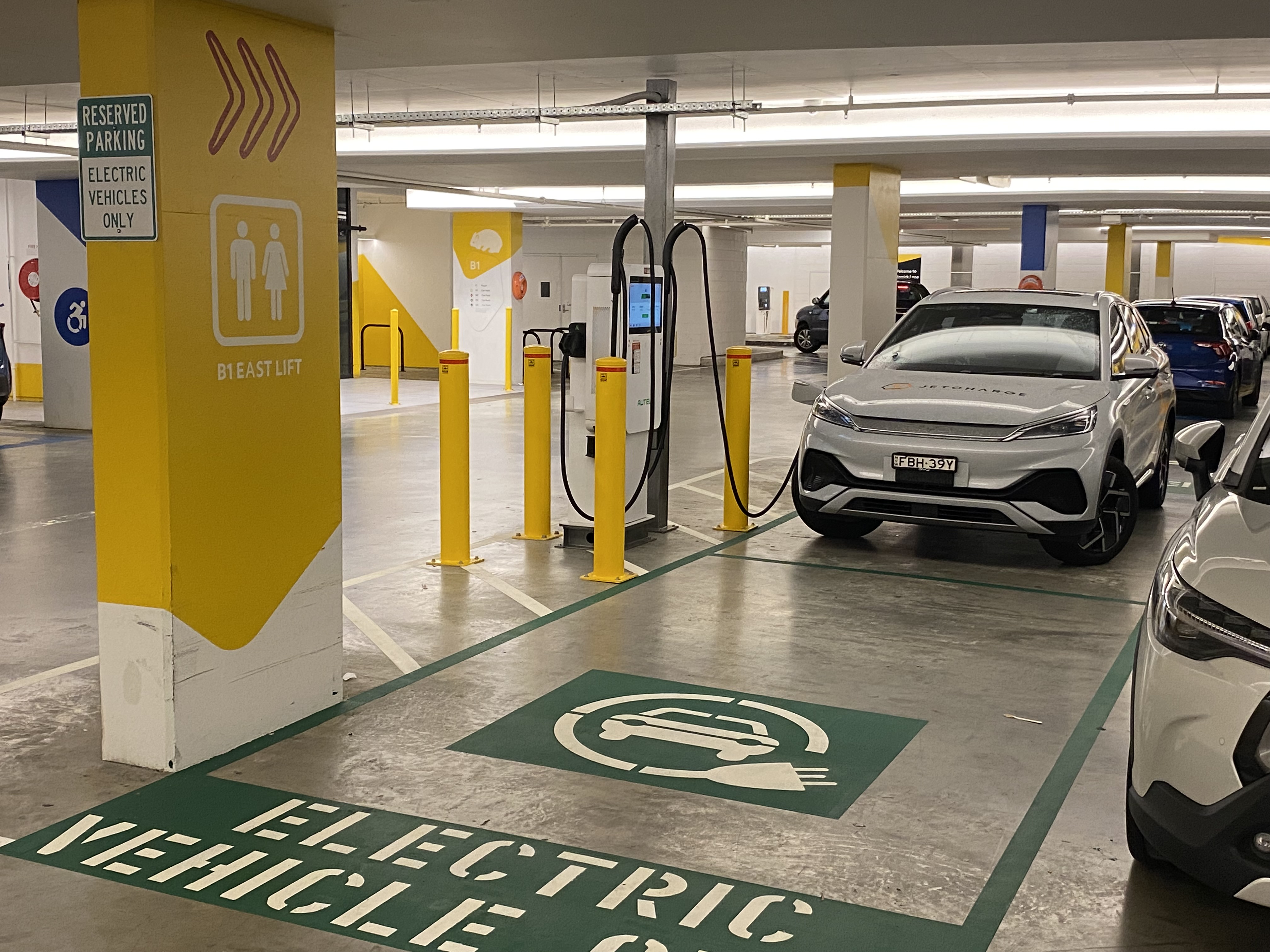
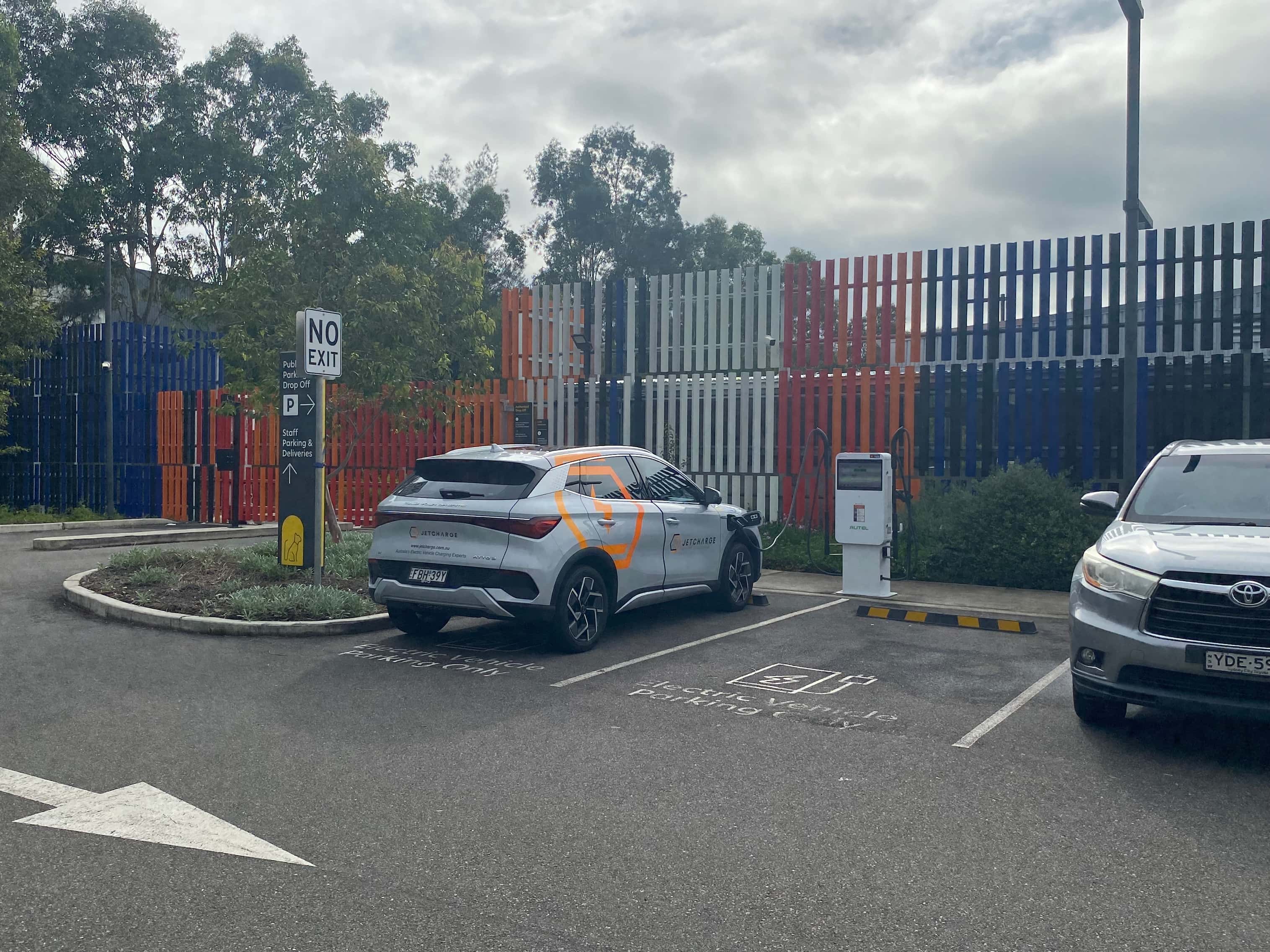
Initial site deployment: The first DC fast charger landed at the Blacktown Animal Rehoming Centre (BARC), a high-traffic site with strong public access, and the perfect proving ground. JET Charge ran a detailed site assessment to make sure the install matched current demand and left room to scale. The charger was up and running shortly after, with minimal disruption to Council operations.
Scalable rollout: Following the success of BARC, the model was extended with a second fast charger installed near the Blacktown Civic Centre. This expanded the network to support both fleet operations and public users, reinforcing a shared infrastructure approach while maintaining high availability and utilisation.
Through this model, Blacktown City Council established a reliable, scalable charging foundation aligned to operational needs and capable of supporting ongoing fleet electrification.
Outcome and Results
The deployment of fast charging infrastructure delivered immediate and measurable improvements in utilisation, access, and fleet adoption transforming charging from a constraint into an operational enabler.
Improved turnover
The shift from slow AC charging to fast DC infrastructure changed driver behaviour from occupying bays for extended periods to utilising chargers for short, targeted top-ups. This has significantly increased charger turnover and improved availability across sites.
High mixed-use utilisation
The Blacktown Animal Rehoming Centre (BARC) site has demonstrated consistently strong utilisation. Daytime usage is driven by nearby businesses and visitors, while evening demand is supported by commercial operators, validating the shared fleet and community charging model.
Capital-efficient deployment
The Charging-as-a-Service model enabled infrastructure rollout without the need for significant upfront capital investment. By shifting to a subscription-based delivery model, the Council reduced financial risk while maintaining flexibility to scale as demand increases.
Accelerated fleet electrification
Reliable and accessible charging has directly supported the Council’s transition to electric vehicles. Blacktown City Council now operates approximately 50 battery electric vehicles (BEVs) and over a 100 plug-in hybrid vehicles (PHEVs), with adoption continuing to increase as confidence in the charging network grows.

“This was a genuine partnership, not a sell-and-walk-away arrangement. And that made a measurable difference to delivery and outcomes.”
Kris Nair
Manager City Fleet, Blacktown City Council
Related Projects