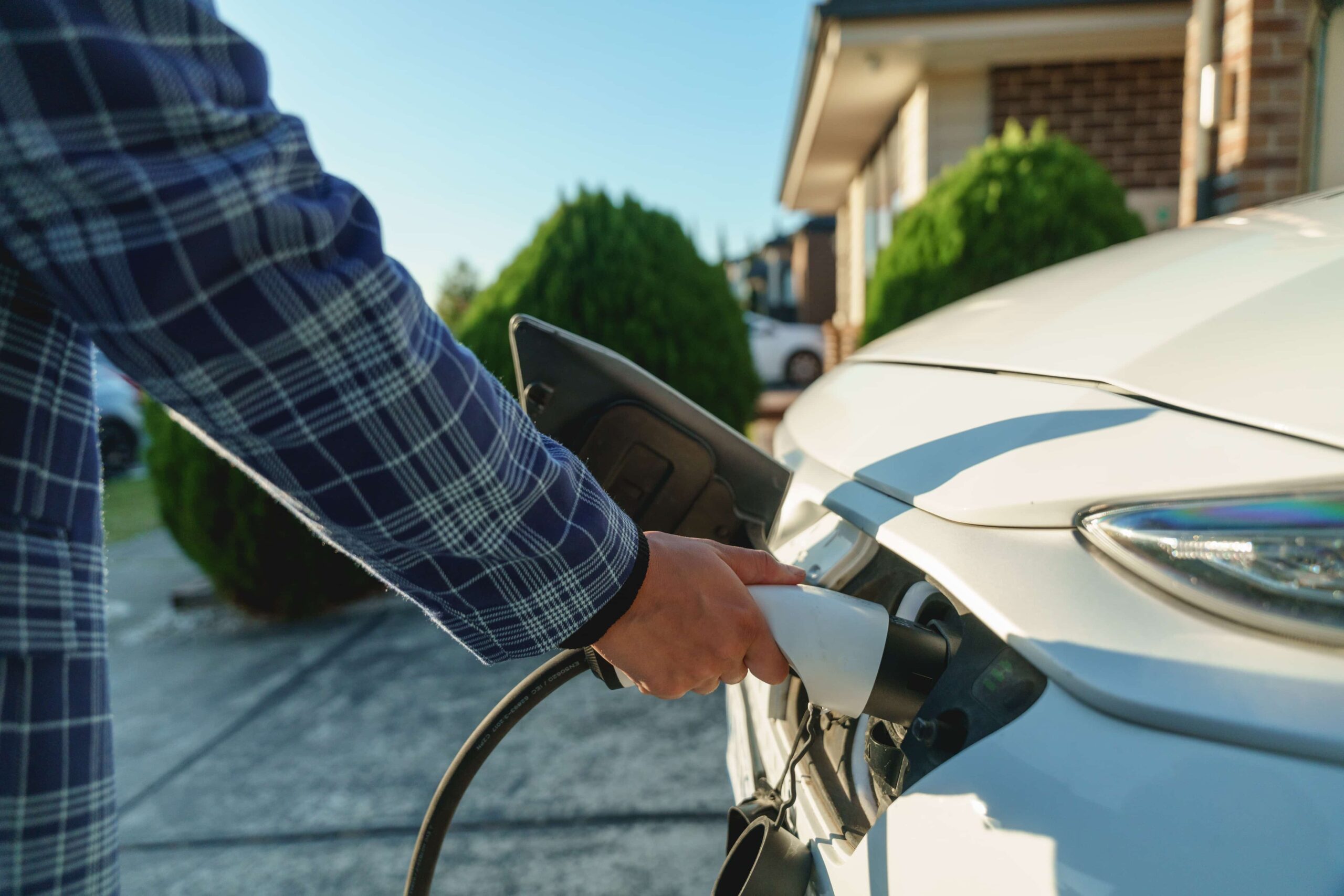
V2G
Vehicle-to-Grid Charging in Australia
Vehicle-to-Grid (V2G) technology is transforming how Australians think about energy.
Turn your EV into more than a car
Vehicle-to-Grid, or V2G, allows a compatible electric vehicle to charge from the electricity grid and send stored energy back when it is useful. With the right vehicle, bidirectional charger, electricity connection and energy service, an EV can help power a home, make better use of rooftop solar and support the electricity grid during periods of high demand.
V2G has moved beyond small technical demonstrations in Australia. Standards-compliant equipment and larger residential programs are now emerging, although availability still depends on your vehicle, charger, electricity network, retailer and location.
What Is Vehicle-to-Grid (V2G)?
V2G (Vehicle-to-Grid) lets electric vehicles do more than just move. It’s a new kind of energy solution where your EV can store energy and send it back to your home or the grid. Your EV can charge as usual, but it can also send power back – helping you use stored energy when it matters most.
Welcome to bidirectional charging in Australia. And to a future that’s more efficient, flexible, and renewable than ever before.

Where V2G Stands in Australia Today
V2G is real – but it’s not widely available just yet.
Here’s where things are at:
- The standard is now in place: The Clean Energy Council (CEC) can now certify V2G-compatible chargers
- As of March 2026, only 3 chargers have been certified, but more EV charging brands are looking to bring models into Australia.
- Only a limited number of EVs currently support V2G, like the Nissan LEAF, and select Mitsubishi, BYD, KIA, Hyundai and Volkswagen models.

What do I need to use V2G?
01.
A V2G-compatible vehicle
The vehicle must support bidirectional energy transfer through its charge port, communication protocol and vehicle software.
02.
A compatible bidirectional charger
A conventional home EV charger cannot export energy from the vehicle. The bidirectional charger must be compatible with the vehicle’s connector and communication protocol
03.
Network connection approval
Export limits, phase configuration, inverter settings, site capacity and remote-control requirements can vary between networks.
04.
A participating energy retailer or service
Being technically able to export does not necessarily mean the exported energy will be optimised or financially rewarded.
05.
A suitable electrical installation
A licensed professional should assess the switchboard, supply capacity, metering, solar system, existing battery, cable route and any backup-power requirements.
06.
Manufacturer-supported use
Supported use may depend on the approved charger, software, program or operating conditions. Warranty treatment is one of the issues currently being examined through larger Australian V2G projects
Powering Real-World V2G
We’re not just testing, we’re proving what’s possible.

Realising Vehicle to Grid Services (REVS)
JET Charge led the tech rollout for the ACT’s REVs Trial, one of the world’s largest V2G pilots.

South Australia Power Networks
JET Charge teamed up with SAPN, Mitsubishi, and Wallbox to bring bidirectional charging to Australian homes.
Explore More From JET Charge

Subscribe to the JET Charge Newsletter
Dive into the latest EV news, expert tips, inspiring stories, and exclusive offers that make going electric easy and exciting.
Let’s drive the future together.
Join 14,492 EV drivers charging smarter every day.
Frequently Asked
Questions
It’s when your EV can both charge and discharge – allowing it to act as a battery for your home or the grid.
V2G powers your home or the grid. V2L (Vehicle-to-Load) powers individual appliances or tools – great for camping or emergencies. V2L is currently available on vehicles like the Hyundai IONIQ 5 and the KIA EV6.
CHAdeMO is a plug type used in some older Japanese EVs, like the Nissan LEAF. It was the standard when the Wallbox Quasar 1 launched, which is why that charger only works with CHAdeMO-compatible vehicles.
But things have moved on. Most EVs coming into Australia now use the CCS2 plug. That’s why the next-generation Quasar 2 will support CCS2 – making it compatible with a much wider range of vehicles.
V2G is progressing, but a few key pieces still need to fall into place:
– The Wallbox Quasar 2 needs to be certified by the Clean Energy Council (CEC)
– EVs that support CCS2-based V2G need to be more widely available
– Each state’s energy distributor must approve the technology for use
The tech is here. Now it’s about ticking the final boxes.
Even with a national standard in place, V2G still needs the green light from each state’s distribution network service provider (DNSP). Every DNSP has its own approval process – so being approved in one state doesn’t guarantee approval in another.
That’s why the Wallbox Quasar 1 was only available in South Australia – and why the Quasar 2 will go through a similar process, state by state.
Right now, the Wallbox Quasar 1 is the only V2G charger that made it through certification – but it’s no longer in production and only works with CHAdeMO.
We’re actively working with other manufacturers to bring more V2G-ready hardware to Australia. Watch this space.
Think of your EV as a battery on wheels.
With V2G, you can:
– Charge your car during the day (using solar if you’ve got it)
– Discharge back to your home at night
– Cut down your energy bills and reduce peak-time reliance on the grid
That’s the path to lower energy costs – and a smarter, more sustainable setup at home.